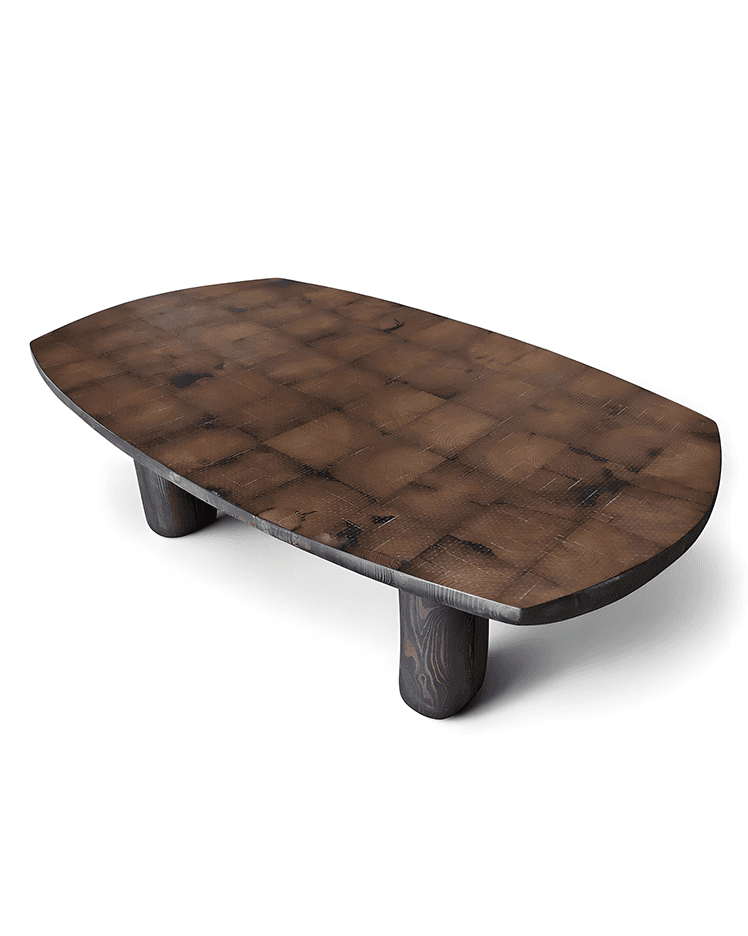
UC143
old chestnut boards from shutdown 3rd generation sawmill & marble stone
180x160x40 cm
Year built
2025
Function
Aux Table
Status
No longer available
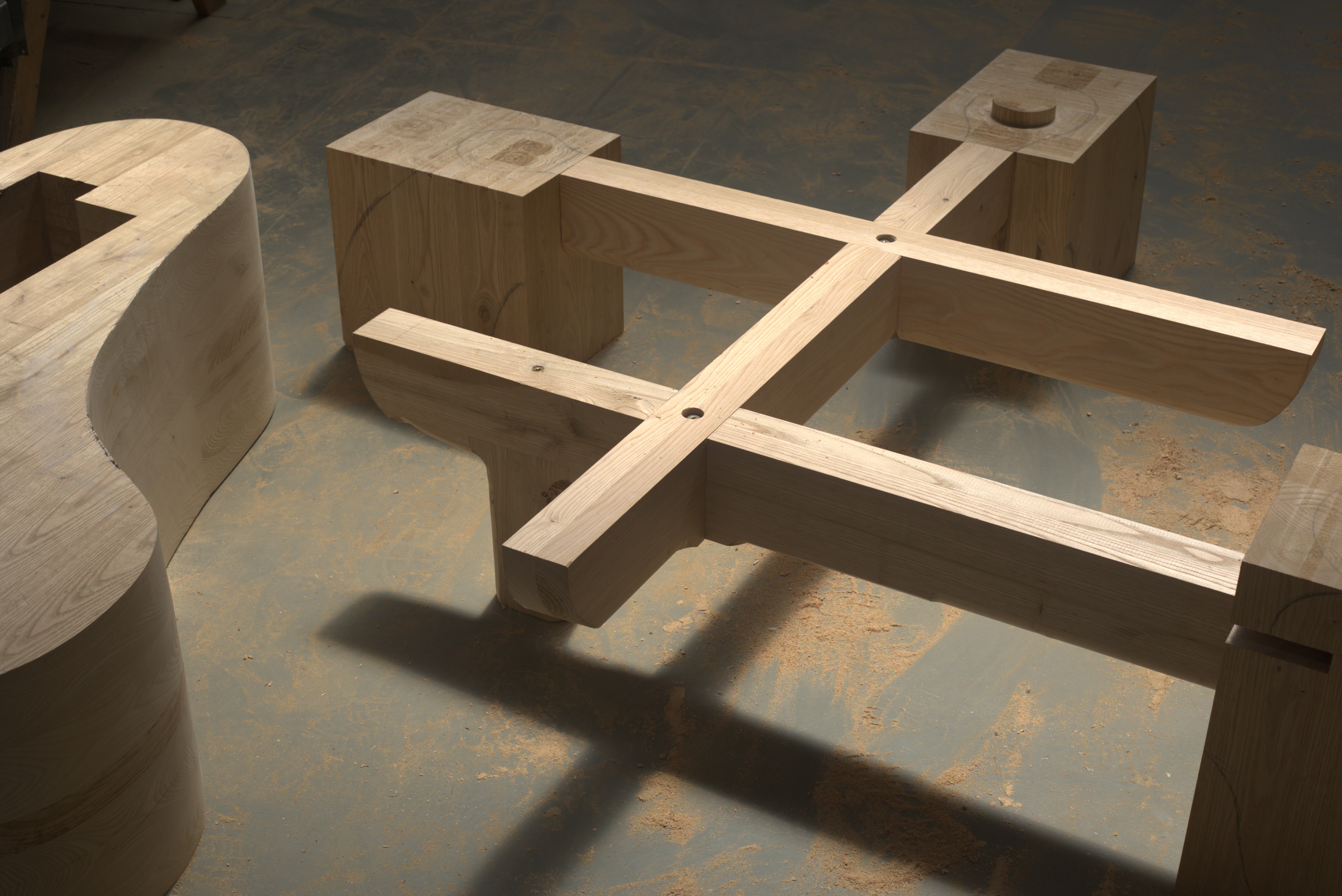
We had been sitting on a particular batch of chestnut for a while — timber from a three-generation sawmill in the Sierra de Béjar, long in decline, one of those businesses in emptying rural Spain that keeps going more out of inertia than ambition. When Paco finally closed it and retired, the way his grandfather had started it, the workshop left behind years of seasoned boards stacked in an old adobe drying house.
We took it all.
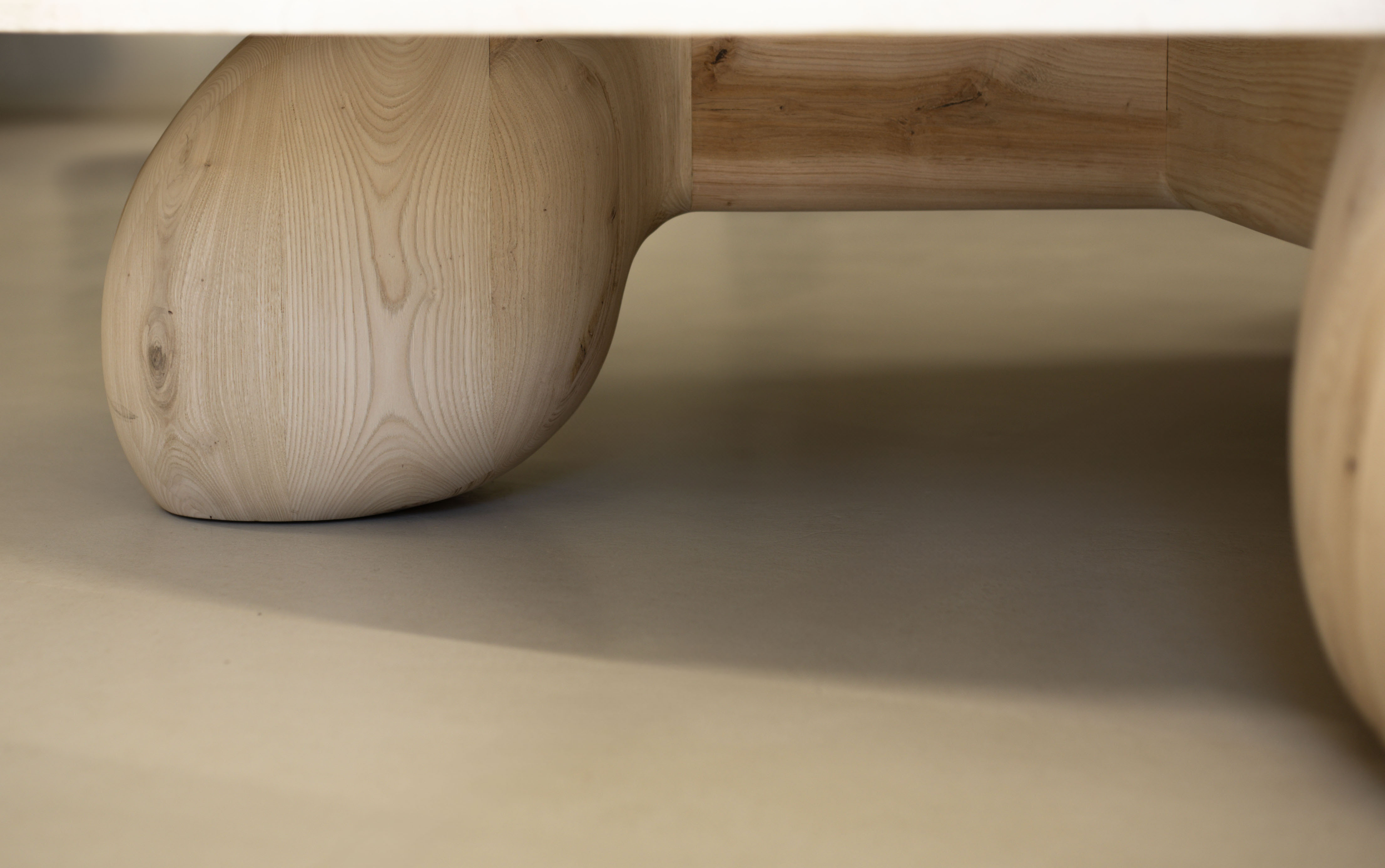
What caught our attention beyond the story was the colour. We knew chestnut from its more common form — the rosy, large grained timber that comes from the wetter forests of Galicia and Asturias. This was different. The sierra sits high and cold, producing compact, slow-growing trees with a pale sand tone — lighter, drier, quieter. That colour was what decided it.
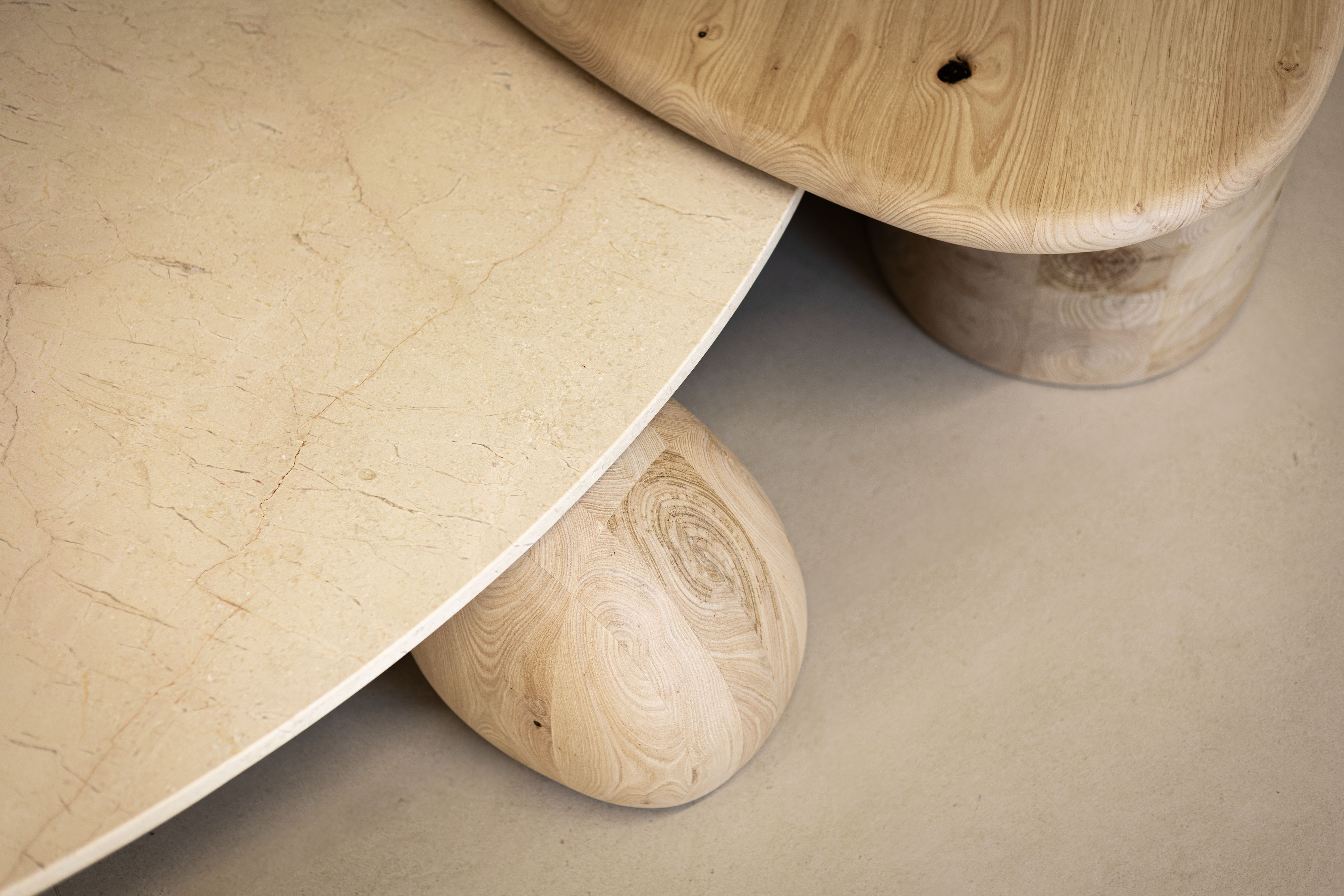
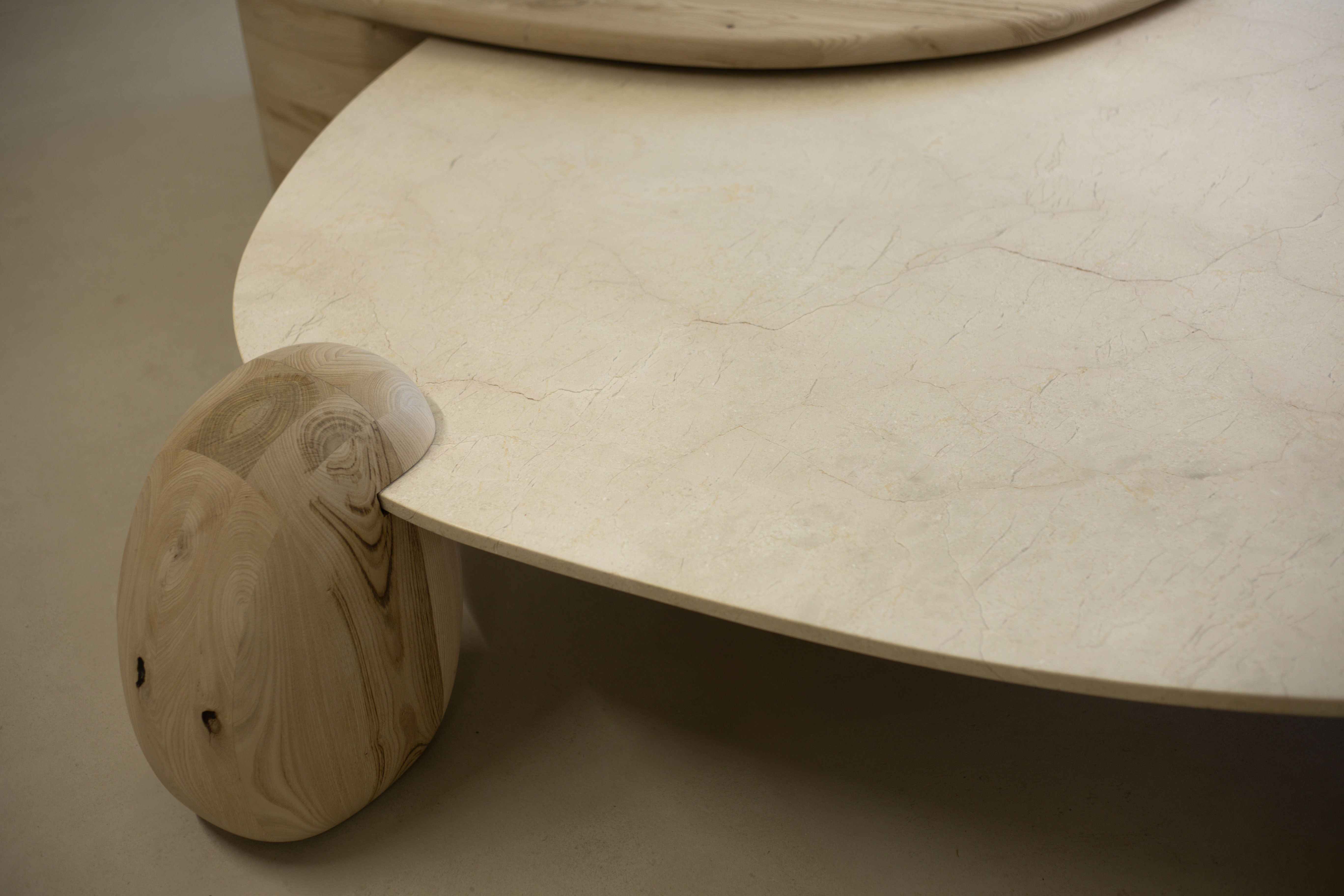
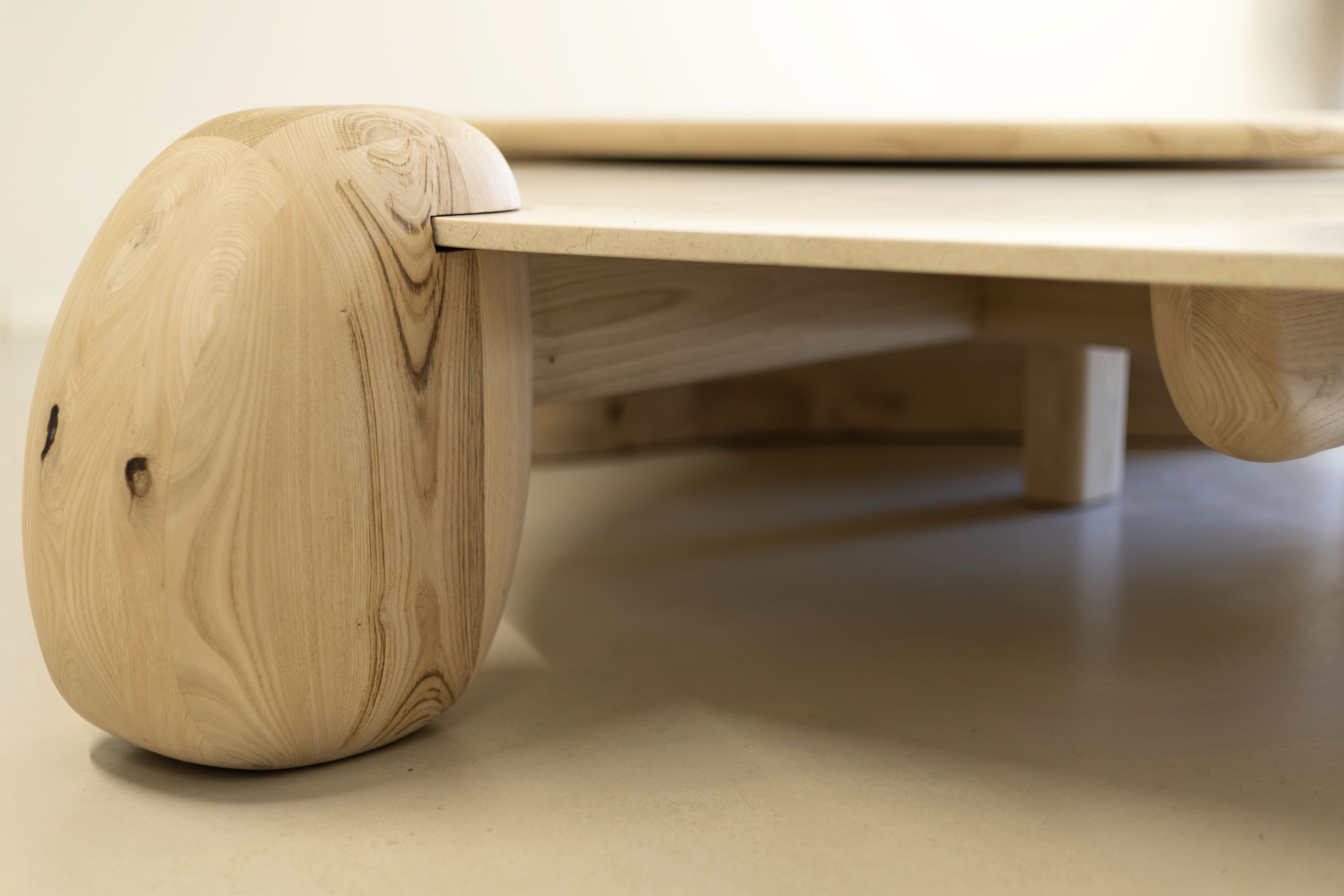
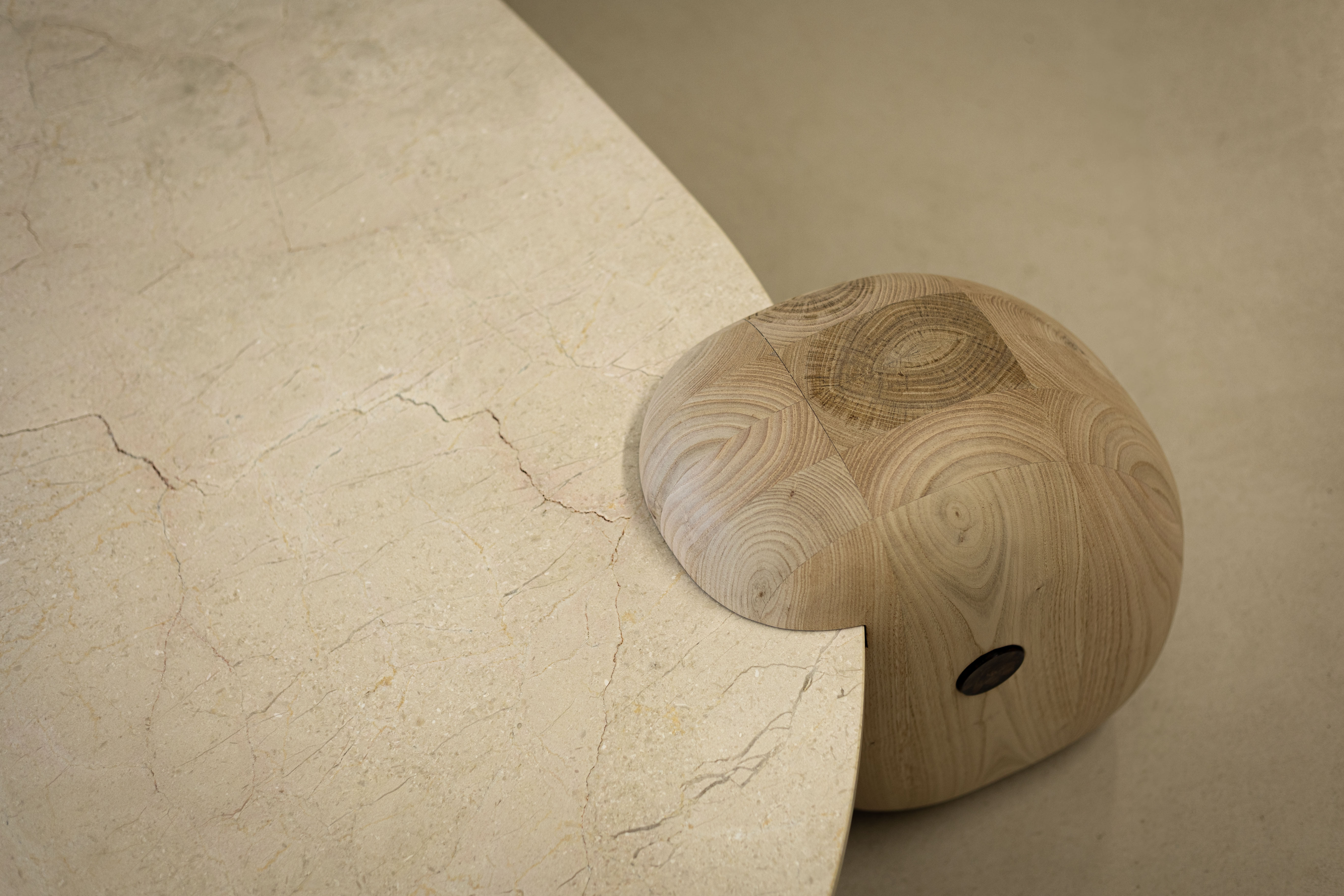
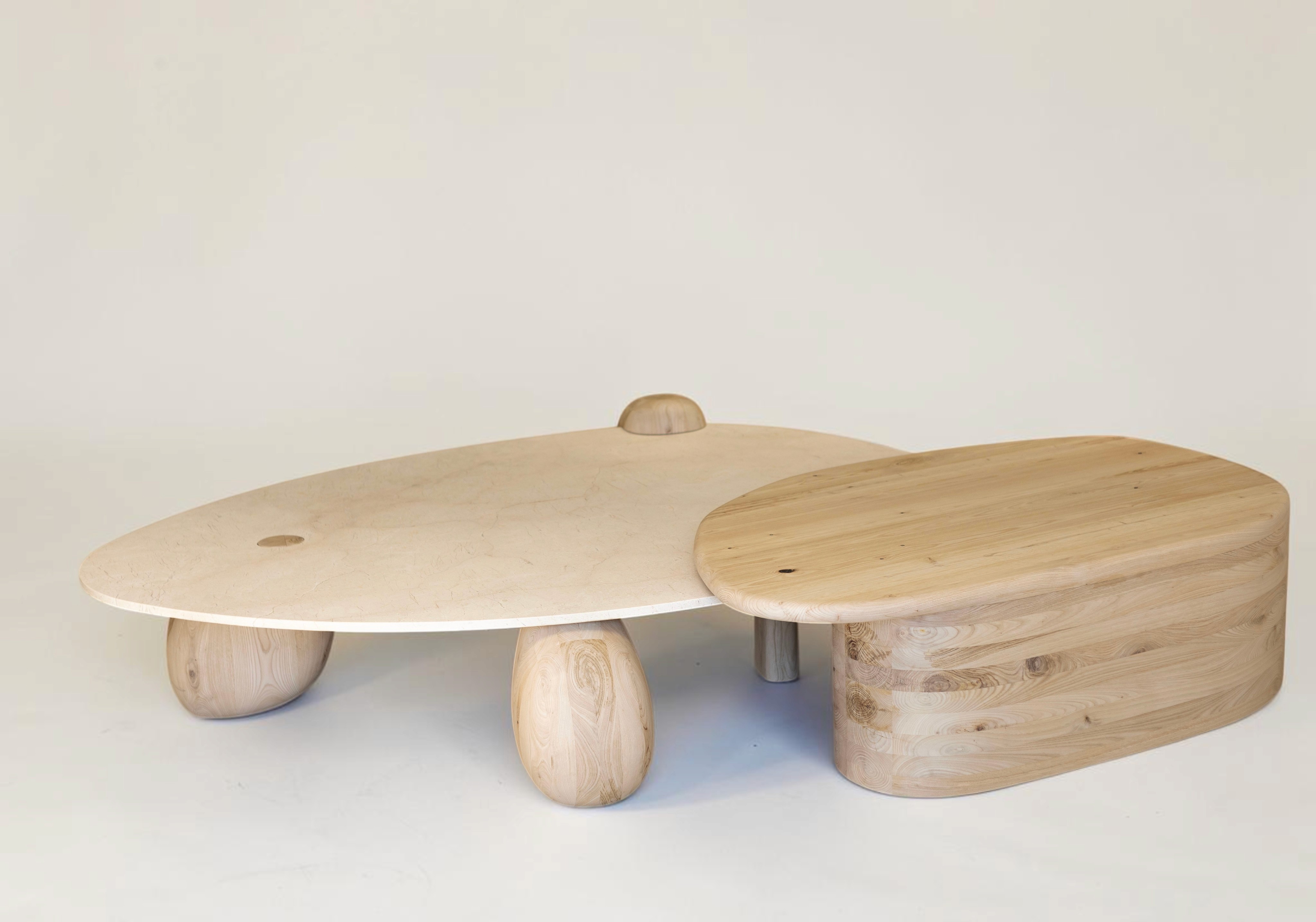
When a client came to us with a commission for a living room with spectacular views over the Bay of Gibraltar — a space generous enough to demand a coffee table conceived as two pieces rather than one — we knew immediately which wood to use. The pale sand tone paired naturally with the white marble top, and the four legs became sculpted organic forms — the kind of shape Iñigo Calleja draws instinctively, where structure and gesture are the same thing.
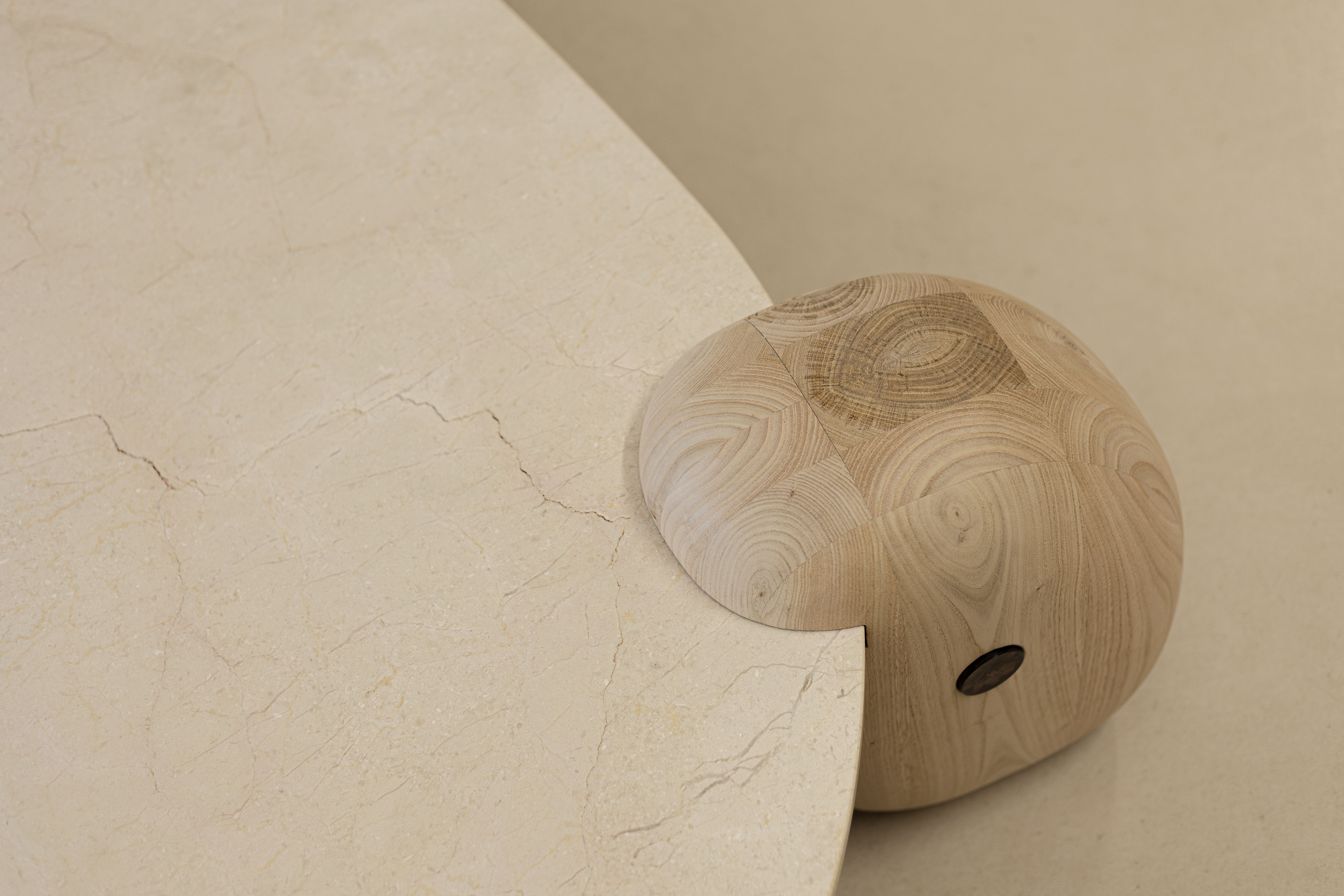
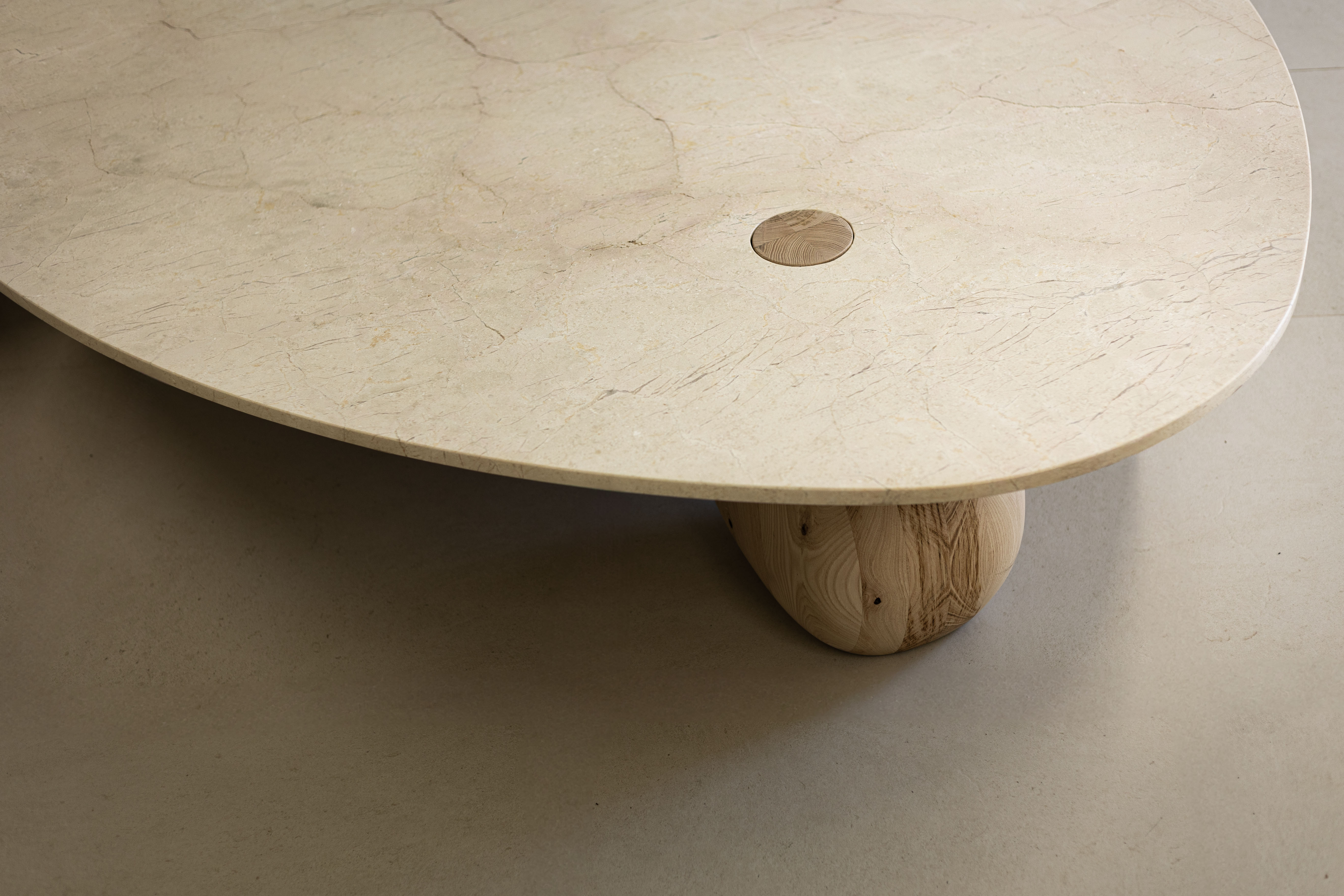
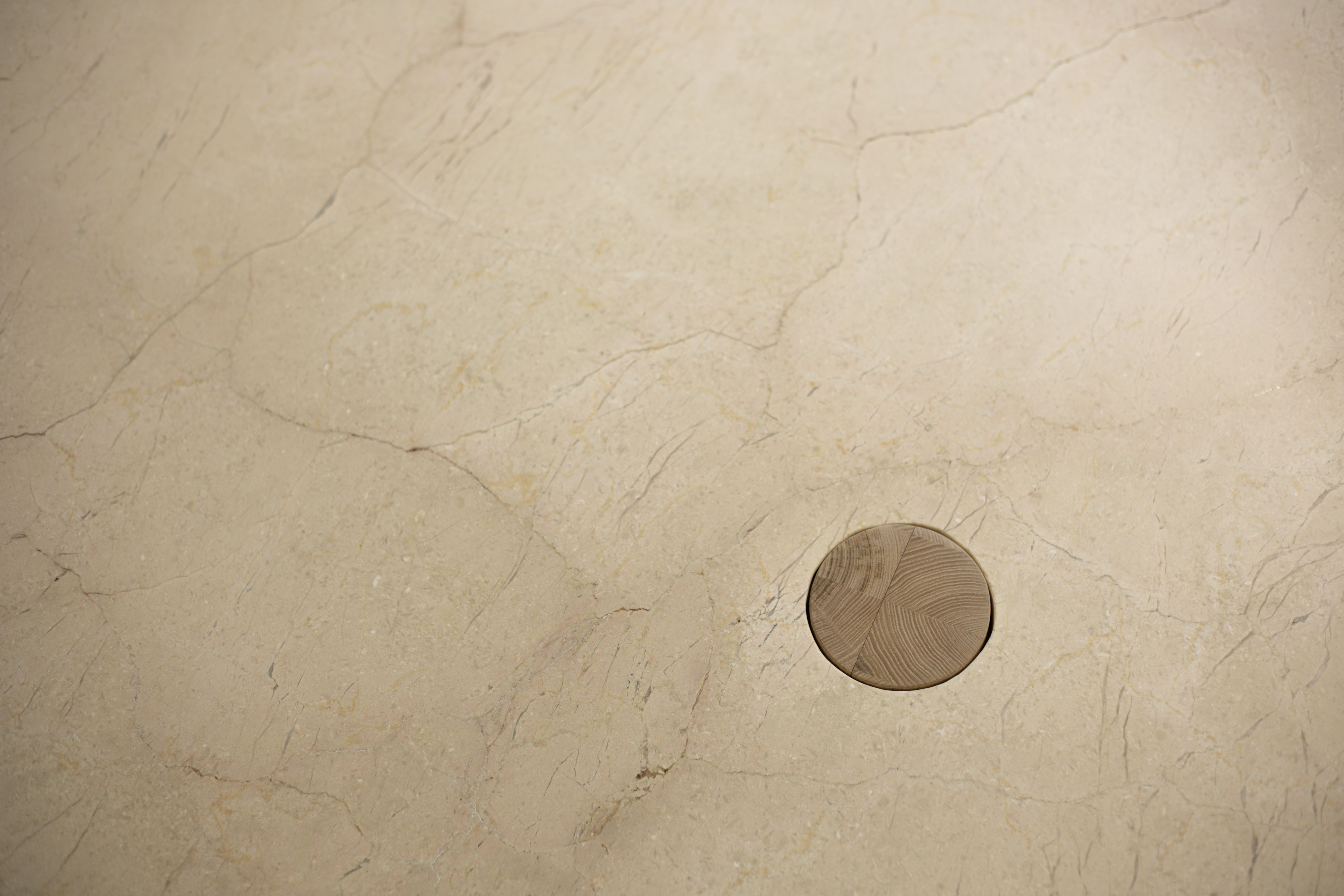
The wood bites into the stone. The stone gives way. The circular opening lets the base breathe back through the surface.
The companion piece adapts to the geometry of the main table, sitting a couple of centimetres higher, partially overlapping it when together, fully independent when the room asks for space. Made entirely in the same chestnut, the two pieces work as a single composition — or as two, depending on the afternoon.